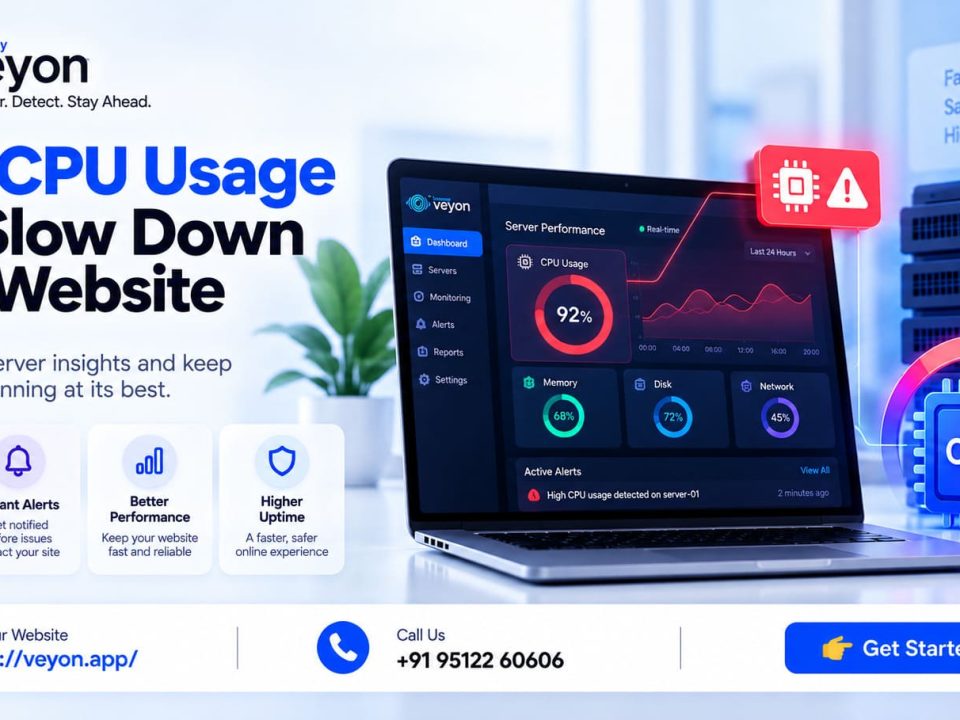





















How Real-Time Alerts Prevent Website Downtime Before It Costs You
Every second your website is down, you're silently losing revenue, trust, and SEO rankings. Real-time monitoring alerts are the difference between a 2-minute blip and a 4-hour disaster — here's exactly how they work.
Key Numbers to Know:
- $5,600 — Average cost per minute of downtime (Gartner)
- 4.2 hours — Average time to detect downtime without monitoring
- Under 30 seconds — Detection time with real-time alerting tools

1. What is Website Downtime, Really?
Website downtime isn't just your site returning a blank page. It's a spectrum of failures — some obvious, some completely silent — that all translate to the same outcome: users can't access your service.
Complete Outage — The server is unreachable. DNS fails or HTTP returns 5xx errors. Total loss of service.
Partial Failure — The homepage loads, but checkout, login, or APIs are broken. Users can visit but cannot convert.
Performance Degradation — Your site loads in 12 seconds instead of 1 second. Not "down" officially, but users abandon it at the same rate.
SSL / Security Failure — An expired SSL certificate shows a "Not Secure" browser warning. Visitors are blocked before they even see your page.
2. The Real Cost of Discovering Downtime Late
The gap between when your site goes down and when you find out is where the real damage accumulates. Without real-time alerts, that gap is measured in hours, not minutes.
Here's what happens during undetected downtime:
- Lost sales and abandoned carts compound every minute your store is inaccessible
- Search engine crawlers index your error pages, triggering immediate ranking drops
- Paid ad clicks land on error pages — you still get charged, but receive zero conversions
- Customer support tickets flood in with no context or resolution timeline
- Trust erodes as frustrated users share negative experiences on social media
- SLA breach penalties kick in for enterprise clients who have uptime guarantees
How Real-Time Alerts Break the Cycle
A real-time monitoring system Veyon acts as a tireless watchdog that checks your site every 30–60 seconds from multiple global locations. The moment something breaks, you know. Here's the full lifecycle of a well-handled incident:
Incident Starts Server returns a 503. Veyon's monitoring node detects it immediately on the first check.
Alert Fired Veyon cross-confirms from a second global node to rule out a false positive, then fires alerts simultaneously via Email, SMS, Slack, Microsoft Teams, and Discord.
Team Acknowledges Your on-call engineer receives the alert, acknowledges the incident in the dashboard, and begins investigation. The public status page is updated automatically.
Root Cause Found A memory leak in a recent deployment is identified. Rollback is initiated. Veyon's incident log captures every action in the full response timeline.
Incident Resolved The site is back online. Veyon sends an "All Clear" notification to all channels. A detailed incident report is auto-generated and exportable as CSV for post-mortems.
What Veyon Monitors in Real-Time
Effective downtime prevention isn't just pinging a homepage once in a while. A comprehensive monitoring platform Veyon watches every layer of your infrastructure simultaneously.
HTTP / HTTPS Status Checks: Veyon checks your site every 30–60 seconds, tracking status codes, response times, and HTTP headers from multiple geographic locations. A 200 OK from India but a 503 from the US? You'll know about it within the minute.
Domain Expiry Check: Get advance warnings before your domain lapses and your entire online presence goes dark overnight. Veyon will alert you before your domain expires.
SSL Certificate Expiry Monitoring: SSL certificates expire silently and without warning. Veyon tracks expiry dates and alerts you 30, 14, and 7 days in advance — before browsers start showing "Not Secure" warnings to your visitors.
API Monitoring: Your APIs are the backbone of your applications — and Veyon makes sure they never fail silently. Monitor API uptime, response time, status codes, and performance in real time with instant alerts whenever an issue occurs. Veyon continuously checks your APIs so your team can detect failures faster, reduce downtime, and keep every service running smoothly.
Response Time Tracking: Slow is the new down. Veyon measures response times per location so you can detect regional latency spikes and CDN failures before they destroy your bounce rates and conversions.
Server and Network Monitoring: Beyond the URL — Veyon monitors your servers, networking layers, and uptime metrics, giving you a full-stack picture of system health, not just what the public-facing URL returns.
Incident Reports and Audit Trails: Every incident is timestamped and logged in full detail — when the outage started, when each alert was sent, when the team acknowledged it, and when the site recovered. Fully exportable as CSV for SLA reporting and compliance.
Conclusion:
Downtime is inevitable — but long, undetected downtime is not. The organizations that handle incidents gracefully are the ones who find out first and act fast. Real-time alerts compress the gap between failure and resolution from hours to minutes, protecting your revenue, your users, and your reputation.
Ready to get started? Veyon offers FREE website, server, and network monitoring with real-time alerts with global monitoring nodes watching your site round the clock.
 Start Monitoring your website now for FREE at veyon.app
Tags :#ServerMonitoring #InfrastructureMonitoring #NetworkMonitoring #UptimeMonitoring #CyberSecurity #TechOperations #DataCenter #ITInfrastructure #DevOps #CloudMonitoring #RealtimeAnalytics #SystemMonitoring #DigitalInfrastructure #SOC #ServerRoom #TechDashboard #AIAnalytics #EnterpriseTech #MonitoringSystem #SaaSPlatform #Uptime #SSL